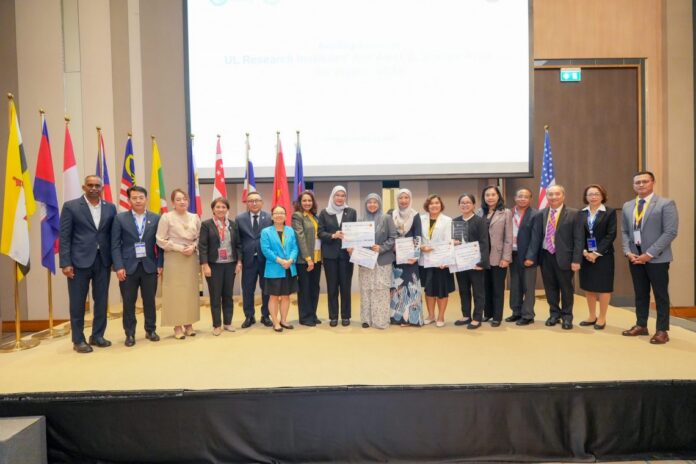
(JAKARTA, 10 July 2026) – Today marks the launch of the 12th annual UL Research Institutes’ ASEAN-U.S. Science Prize for Women, recognising the significant contributions of ASEAN women in science, technology, engineering, and mathematics (STEM). The prize is launched in partnership between UL Research Institutes (ULRI), UL Standards & Engagement (ULSE), the US-ASEAN Business Council (USABC) and the Association of Southeast Asian Nations (ASEAN). The Prize underscores the pivotal role of women in promoting scientific excellence and advancing gender equality in the ASEAN region.
2026 Theme: AI for Advancing Inclusive and Resilient Healthcare in ASEAN
This year’s competition aims to spotlight innovative research that merges knowledge, data, healthcare advancement, and artificial intelligence (AI) to provide real solutions to regional health issues while promoting collaboration, equity, and resilience across the ASEAN healthcare ecosystem. The goal is to push forward science, technology, and innovation that help create healthier, more inclusive, and sustainable communities in the area. The award emphasises the need to utilise new technologies and AI to improve healthcare accessibility, strengthen health system readiness, support underserved communities, and enhance resilience against future public health challenges.
Competition Categories and Prizes
Eligible candidates will compete in two categories based on their stage of career:
- Mid-career Scientist category (those 45 years of age and under)
- Senior Scientist category (those 46 years of age and over)
Finalists will be invited to participate in a final judging session and attend the official award ceremony, which will be held during the ASEAN Committee on Science, Technology and Innovation (COSTI) meetings in Viet Nam in October 2026.
Winners will be awarded US$12,500 each, with runners-up awarded US$5,000 each, thanks to the generous sponsorship of the ULRI.
ASEAN COSTI Chair emphasises the value of this initiative in strengthening regional resilience: “This year’s theme, AI for Advancing Inclusive and Resilient Healthcare in ASEAN, could not be more timely. Across ASEAN, the impacts of climate change and public health are growing concerns. The work of women scientists in leveraging cutting-edge technologies like AI is essential to shaping more inclusive, sustainable, and data-driven solutions. COSTI is proud to continue this initiative of championing scientific excellence and gender equity in ASEAN.”
President and CEO of USABC, Ambassador (Ret.) Brian McFeeters, highlights USABC’s contribution to this year’s Science Prize: “We are proud to partner with UL Research Institutes and ASEAN’s Committee on Science, Technology and Innovation to support the 2026 Science Prize for Women, an initiative pivotal for recognising the excellence of women researchers in STEM across ASEAN. USABC and its 180-plus member companies are honored to showcase the contribution of ASEAN women researchers in solving regional challenges through cutting-edge research in healthcare, AI, and an innovation-led ASEAN.”
“ASEAN is one of the world’s most dynamic regions for scientific innovation, with extraordinary potential to advance solutions that improve health and resilience at scale,” said Chris Cramer, Chief Research Officer, UL Research Institutes. “ULRI is proud to continue supporting the ASEAN-U.S. Science Prize for Women, recognising the vital contributions of women scientists. This year’s theme highlights the transformative role of artificial intelligence in advancing more inclusive, accessible, and resilient healthcare systems across the region.”
Call for Applications
We invite women scientists from 11 ASEAN Member States who hold doctoral degrees relevant to this year’s theme to apply. This is a unique opportunity to showcase impactful research and innovations that address regional healthcare needs through developing innovative AI-driven solutions.
For more information and to apply, please visit the UL Research Institutes’-ASEAN-U.S. Science Prize for Women website here.
Queries can be directed to [email protected]